
L2 · Close range
Rung L2: Close range
L2 is the rung that reads clearly when you sit down and faintly at the door — and then goes quiet after ten minutes because your nose has adapted, not because the carrier has failed. Most of the confusion in this register lives in that gap.
By The Scent Desk·Published 2026-09-26
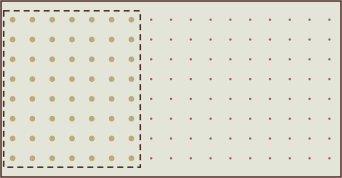
| Covers | 3–12 m2 |
|---|---|
| Readable at | 0.8–2 m |
| What it claims | Clearly present at seating distance, faint at the door. |
| Where it applies | 3-12 m2; one 40-60 g wax tablet, one 60-90 g plaque, a four-reed diffuser, or three sprays on upholstery. |
| Typical rooms | Bedroom, study, bathroom, small kitchen, car. |
| Air exchange | Handles one air change an hour without dropping out. Above two changes an hour it behaves like L1, so pair it with a ventilated room only if you accept an intermittent read. |
What you should notice
- You notice it when you sit down and stop noticing within ten minutes — habituation, not failure.
- It is still there when you come back from another room — the clearest confirmation L2 is set correctly.
- It reaches the far side of a 20 m2 room — that is L3 territory; reduce the reed count or move the carrier closer.
How to adjust it
Step up by adding reeds one at a time, not by switching direction. Each additional reed on a 4-reed diffuser adds roughly 15% output.
If it overshoots — Reed count above six in a bedroom. Remove two reeds and turn them end for end to stop drawing.
If it reads sharp — The carrier sits within 60 cm of a pillow or a seat back. Move it at least 1.2 m from any head position.
Definition and test
L2's detection distance is 0.8 to 2.0 m, covering 3 to 12 m2. The typical settings are a bedroom, a study, a bathroom, a small kitchen and a car cabin.
The test is not "you can always smell it". It is "you notice it when you walk in, stop paying attention after ten minutes, and notice it again when you come back". The third part is the most reliable of the three. Still there on return means the dose is right; gone entirely on return means it is low; heavier on return means it is high.
Habituation, and why adding more is the wrong answer
Habituation sets in over three to ten minutes, and its speed depends on concentration: a stronger scent habituates faster and more completely. A room where "it disappears after ten minutes" therefore cannot be fixed by adding more, because more makes it habituate faster. Push that direction and you end up with the worst of both — sharp on entry, silent once seated.
The working response is to accept an intermittent read and recalibrate by leaving and coming back. That is also why L2 replacement decisions should never be taken from inside the room.
L2 is the rung you trim in 15% steps
L2 is the only band where the available adjustment step is fine enough to be useful. On a four-reed diffuser, each additional reed adds roughly 15%, so four to six reeds walks almost exactly from the bottom of L2 to the top. A bigger step — four straight to eight — jumps the entire band and lands in L3 with nothing usable in between.
Wax tablets and plaques do not offer that granularity; their adjustment comes from a lid, worth about 60%, and from distance. In a small room a reed diffuser is therefore the most precisely controllable format available, provided the reed count is kept low.
Boundaries with the neighbouring rungs
| Boundary | Test |
|---|---|
| Bottom of L2 against L1 | Step outside the room, close the door, wait ten minutes, open it. Clear in the first second means L2 |
| Top of L2 against L3 | Detectable at the far side of a 20 m2 room means L3 |
Three failure signs
| Sign | Cause | Adjustment |
|---|---|---|
| Nothing after ten minutes | Habituation, which is normal. If it also reads sharp on entry, the carrier is too close | Move it beyond 1.2 m; do not add oil |
| Still heavy when you come back | Dose too high, or the room has no air exchange | Drop one reed or lower the load; open a window every two hours |
| Intermittent, with obvious swings | The carrier sits in an intermittent draught, usually a vent or a doorway | Move it out of the direct airstream |
The commonest misconception
The commonest misconception is treating L2 as "medium strength". L2 is not "twice L1"; it is "reads when you sit down without having to look for it". In a 12 m2 room the absolute release of an L2 set-up may be half that of an L3, and the felt difference is far smaller than that ratio — because what you feel is governed by distance, and L2 works at a much shorter one.
Failure diagnosis
| What you notice | What caused it | What to change |
|---|---|---|
| Clear at the desk, gone by the door | The rung is working exactly as specified. L2 is not meant to reach the far wall. | If the doorway has to read, change rung rather than dose. Adding units to an L2 set-up produces an L2 with a hot spot, not an L3. |
| One side of the room reads, the other does not | The carrier is sitting in the moving air, so the scent is carried past the near seating before it can build | Move it out of the draught and keep 1.5 m clear of any vent. Position fixes shape; oil only fixes amount. |
| It reads noticeably louder after dark | Cooling air drops toward the floor and takes the layer with it, concentrating it at seat height | Raise the carrier 20-30 cm for the evening, or accept it as the shape of the rung and set the position for the evening hours. |
Plans published at this rung
| Rooms | Carrier | One fill lasts | Running cost |
|---|---|---|---|
| Bedroom | Wax tablet | 30 d | CNY 19 |
| Study | Wax tablet | 26 d | CNY 17 |
| Bathroom | Ceramic stone | 38 d | CNY 16 |
| Entryway | Scent sachet | 34 d | CNY 11 |
| Kitchen | Scent sachet | 28 d | CNY 10 |
| Wardrobe | Scent plaque | 62 d | CNY 15 |
This record went live on 2026-09-26. Records dated later in the register are not listed anywhere on the site until their date arrives.