
STDY · L2 · Wax tablet · dry-woody
A 55 g wax tablet on a shelf above the desk, not on the desk
The study is closed for hours and occupied the whole time, which makes it the only room where a mid-strength carrier stays readable without becoming background noise. A 55 g wax tablet with a 48-52 C melt band, sitting on the shelf 40 cm above the desktop, gives 26 days of a dry-woody read across 8 m2 without a single drop of liquid near a keyboard.
By The Scent Desk·Published 2026-09-12
- One fill lasts 26 d
- Coverage 8 m2
- Refill cycle 26 d
- Running cost CNY 17
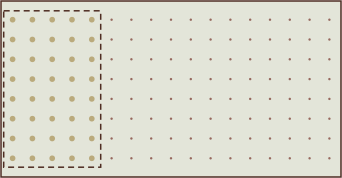
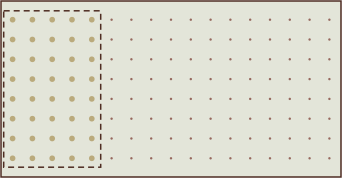
Dot spacing and radius are driven by the rung, the field width by the covered area, and the second field by the room's air class. Both fields are generated at build time from the room and carrier records.
| Floor area | 8.6 m2 |
|---|---|
| Air exchange | closed |
| Household | no pets or small children |
| Direction | dry-woody |
| Carrier | Wax tablet WT |
Refill calculator
Change the area or the air class and the server recomputes the cycle. The script upgrades this to a live preview; with the script off the button still works.
Basis: 8.6 m2 · closed. A smaller floor area, so the unit count can come down — but the refill interval does not stretch linearly, because a small room saturates sooner. Air class unchanged from the original plan.
Why wax and not a bottle
The controlling risk in a study is not scent, it is liquid. A reed diffuser runs far more concentrated within 25 cm than at arm's length, and a desk within that radius holds a keyboard, a mouse mat, printed paper and a charging cable. One knock and what you lose is the paperwork, not the fragrance. A wax tablet has no base liquid to spill and no vessel to break, and in an 8 m2 closed room that advantage decides the format on its own.
The second reason is temperature. A study's temperature swings about 4 C across the year and sits between 20 C and 26 C nearly all of it. Wax output is driven by ambient temperature, so a stable room gives a stable output curve, which is exactly what this format is good at. Put the same tablet in a car cabin with a 22 C swing and the logic collapses completely.
Placement: 40 cm above the desktop, 80 cm from the chair
On the desktop itself — about 0.75 m — the tablet sits inside the wrist zone and at the closest breathing position in the room, and it will read noticeably strong. Lifting it to a shelf at 1.15 m puts it just above head height when seated, and the read changes character immediately from "something on my desk" to "the room is scented".
Keep at least 80 cm of horizontal distance as well. Closer than that, a sharp patch develops after about three hours. Nothing has gone wrong with the wax; the nose has habituated to a high concentration at close range and can no longer resolve the room-level note behind it. This is the single most common misdiagnosis in a study — people conclude the scent has faded when it is only the near field that has been filtered out.
Assembly: three steps, no tools
- Lift the tablet out of its tin and peel the surface film. Leaving the film on costs roughly a third of the output for the first three days.
- Stand the tablet on the tin lid or a small porcelain dish. Do not lay it directly on lacquered wood — a 48 C melt band tablet will weep slightly at 30 C ambient.
- To raise output, stand the tablet on edge against the wall: exposed area increases by about 40%. To lower it, put the lid back on and leave a 1 cm gap.
The tin's own lid is the best tuning tool in this plan, and it is more direct than choosing a different scent load. Closed, output drops by roughly 60%, which is one full rung.
Life and replacement
55 g with a 620-hour release window is 26 days at 24 hours a day. The study is empty about ten hours a day, and closing the lid during those hours stretches the tablet past 40 days — but repeated opening and closing skins the wax surface and makes the output curve lumpy. Use it open for 26 days and replace it whole. Do not attempt a top-up: a wax tablet is poured once, and re-melting shortens the release window to roughly 60% of the original.
Cost: CNY 17 a month
A 55 g tablet costs about CNY 17 and is replaced every 26 days, so the plan costs one tablet a month. There are no reeds, no base liquid and no vessel depreciation, which makes this the easiest line in the register to account for. The same room run on a reed diffuser costs about CNY 28 a month, and the difference is container and reed amortisation rather than fragrance.
Diagnosis
- Nothing at all. The surface has skinned over, or the film is still on. Wipe with a dry lint-free cloth; past day 20 it is normal decay and time for a new tablet.
- Too strong. The tablet is within 50 cm of a radiator, a lamp shade or a laptop exhaust, and local temperature is above 35 C. Move it clear of the heat source.
- A sharp patch. The carrier is closer than 80 cm to the seated position. Move it to the outer end of the shelf, or close the lid to a 1 cm gap.
- The note changes after two weeks. That is not the wax turning; it is the light fraction leaving first. Dry-woody directions hold their character longer than citrus in a study for exactly this reason.
Assembly, in order
- Unwrap and stand it face up — Take the tablet out of its tin or off its cord and set it on a saucer with the widest face upward. Dust settles on the warm face and dulls it faster than the underside ever does.
- Give it a warm hour — Room temperature is what drives the output. Below 18 C the tablet goes quiet; above 30 C it softens and leaves a mark on whatever it stands on.
- Rotate a quarter turn every ten days — Turn the tablet a quarter turn every ten days and flip it once at the halfway point of its life. The face that has been up releases measurably faster than the one that has been down.
- Retire or re-melt — When the surface goes dull and stops reading at arm's length, either re-melt it with a fresh load or move it into a drawer as a liner. There is nothing to top up in place.
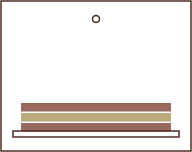
Code WT · scent released from the wax surface at room temperature, output driven by ambient temperature
What it costs to keep running
| Running cost | CNY 17 |
|---|---|
| One fill lasts | 26 d |
| Refill cycle | 26 d |
| Coverage | 8 m2 |
| Refill and replacement | 55 g wax tablet (single pour, no top-up), shallow tin with lid |
Failure diagnosis for L2
| What you notice | What caused it | What to change |
|---|---|---|
| Clear at the desk, gone by the door | The rung is working exactly as specified. L2 is not meant to reach the far wall. | If the doorway has to read, change rung rather than dose. Adding units to an L2 set-up produces an L2 with a hot spot, not an L3. |
| One side of the room reads, the other does not | The carrier is sitting in the moving air, so the scent is carried past the near seating before it can build | Move it out of the draught and keep 1.5 m clear of any vent. Position fixes shape; oil only fixes amount. |
| It reads noticeably louder after dark | Cooling air drops toward the floor and takes the layer with it, concentrating it at seat height | Raise the carrier 20-30 cm for the evening, or accept it as the shape of the rung and set the position for the evening hours. |
Same room, other rung
Open the rung card — L2 · Close range
This record went live on 2026-09-12. Records dated later in the register are not listed anywhere on the site until their date arrives.