
BATH · L2 · Ceramic stone · herbal-eucalyptus
A 92 g porous stone in a 5.6 m2 bathroom that runs at 72% humidity
A bathroom after a shower holds 70-85% relative humidity for about forty minutes, and water vapour competes with fragrance for the same air before the extractor removes both. A 92 g unglazed stone at 30% porosity, loaded with 5 ml of a herbal-eucalyptus base and standing on a glazed saucer, holds an even L2 read across 7 m2 for 38 days through that cycle.
By The Scent Desk·Published 2026-09-23
- One fill lasts 38 d
- Coverage 7 m2
- Refill cycle 38 d
- Running cost CNY 16
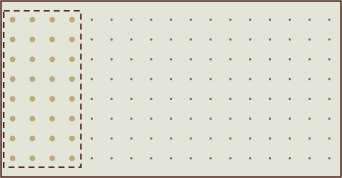
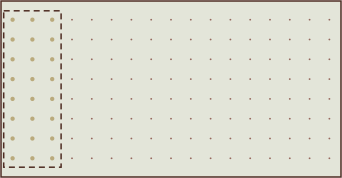
Dot spacing and radius are driven by the rung, the field width by the covered area, and the second field by the room's air class. Both fields are generated at build time from the room and carrier records.
| Floor area | 5.6 m2 |
|---|---|
| Air exchange | draughty |
| Household | no pets or small children |
| Direction | herbal-eucalyptus |
| Carrier | Ceramic stone STON |
Refill calculator
Change the area or the air class and the server recomputes the cycle. The script upgrades this to a live preview; with the script off the button still works.
Basis: 5.6 m2 · draughty. A smaller floor area, so the unit count can come down — but the refill interval does not stretch linearly, because a small room saturates sooner. Air class unchanged from the original plan.
Why a bathroom is the wrong place for a bottle
A reed diffuser fails in a bathroom in a specific and awkward way. It does not go quiet — it goes fast. Rising humidity accelerates the evaporation of the light fractions in the base liquid, output spikes for the first twenty minutes, the extractor removes everything, and the following two hours read as nothing at all. In a 5.6 m2 room that on-off pattern is impossible to ignore, and it is the reason this plan uses a porous stone while the bathroom's L1 plan uses three reeds.
A stone's release is governed by pore structure rather than by the evaporation rate of a liquid surface. Humidity lifts its output by about 20%, against a factor of three or more for a bottle. In a room whose humidity swings eight points several times a day, that difference is the whole argument.
Unglazed face up, and the saucer is not optional
At 30% porosity, 5 ml of oil fills roughly the outer third of a 92 g stone's open structure. Loaded face up, the oil migrates slowly down through the pores and the release period stretches to 38 days, against about 25 for a denser stone loaded the same way.
The saucer has to be glazed. A stone sitting in 72% humidity draws water from below, so a bare terracotta dish or direct contact with tile produces a dark water mark at the base within two weeks and, before that, a damp note in the scent. Glazed porcelain or glass only.
Loading and topping up
- First load 5 ml, applied with a pipette in a spiral from the centre outward. Do not dump it in one spot; the oil will run off the face before the pores take it.
- Leave it for an hour to draw in, then wipe the surface film away. A film left on the face reads as a sharp patch for two days.
- After that, top up only when the stone is silent at 20 cm. In bathroom conditions that is roughly every 38 days.
- Reduce each top-up: 3 ml the second time, 2 ml the third. The pores are already partly filled, and repeating 5 ml will overflow onto the saucer.
A stone takes 6 to 20 load cycles before the structure stops holding. Keeping the same scent direction lets you top up indefinitely. Changing direction requires two weeks of airing in a ventilated spot first, otherwise the old and new directions combine into a sweet, unidentifiable middle that is worse than either.
Placement: clear of both the shower and the fan
At least 1.2 m from the shower zone and at least 1 m from the extractor. Directly under an extractor the stone sits in a negative-pressure pocket and its output goes straight outdoors.
1.2 to 1.4 m is the right height — the shelf beside the mirror cabinet, in most bathrooms. Below 1 m the stone sits in the wettest floor layer; above 1.5 m it sits in the still layer of warm air at the top. Both make the read flicker.
Cost: CNY 16 a month
A 92 g stone costs about CNY 45 and takes more than 12 loads, which is about CNY 1.3 a month over three years. 5 ml of oil at CNY 68 for 30 ml works out at about CNY 11 a fill, every 38 days, or CNY 9 a month. A glazed saucer is a one-off CNY 18. The measured total is CNY 16 a month, the cheapest plan in this register outside the sachets.
Diagnosis
- The scent comes and goes. The stone is inside the extractor's pull. Move it a metre clear.
- A dark mark under the stone. Water drawn up through direct contact with tile or bare wood. A glazed saucer fixes it; nothing else does.
- It overflows when topped up. The pores are saturated. Skip one top-up, leave it 24 hours, then re-check whether it actually needed anything.
- A heavy, damp note. Sustained humidity above 80%. Take the stone out, air it for a day, put it back.
- The note is muddy after a direction change. The previous oil is still in the pores. Air it for two weeks before the next load, or accept the mix for one cycle.
Assembly, in order
- Load with a pipette, not a pour — Draw three to eight millilitres and apply it across the unglazed face in a spiral. A poured load floods the outer pores and leaves the centre dry for a week.
- Let it draw for an hour — Leave the stone face up for an hour before it goes anywhere. Handling it sooner pushes oil onto your hands and out of the pores that were supposed to hold it.
- Re-oil on dryness, not on schedule — Hold the stone twenty centimetres from your face. If there is nothing there, re-oil; if there is still something, wait. A calendar is a worse guide than your own nose for this carrier.
- Keep one stone, one direction — Porosity is a one-way door. A stone that has held a woody direction keeps a trace of it for life, which is why seconds sell cheap and why this one should not be re-tasked.
Code STON · open pores hold oil and meter it out through the whole body, not just the exposed face
What it costs to keep running
| Running cost | CNY 16 |
|---|---|
| One fill lasts | 38 d |
| Refill cycle | 38 d |
| Coverage | 7 m2 |
| Refill and replacement | 92 g unglazed ceramic stone, 5 ml oil load, glazed saucer |
Failure diagnosis for L2
| What you notice | What caused it | What to change |
|---|---|---|
| Clear at the desk, gone by the door | The rung is working exactly as specified. L2 is not meant to reach the far wall. | If the doorway has to read, change rung rather than dose. Adding units to an L2 set-up produces an L2 with a hot spot, not an L3. |
| One side of the room reads, the other does not | The carrier is sitting in the moving air, so the scent is carried past the near seating before it can build | Move it out of the draught and keep 1.5 m clear of any vent. Position fixes shape; oil only fixes amount. |
| It reads noticeably louder after dark | Cooling air drops toward the floor and takes the layer with it, concentrating it at seat height | Raise the carrier 20-30 cm for the evening, or accept it as the shape of the rung and set the position for the evening hours. |
Same room, other rung
Nothing at this rung has come off the drip yet.
Open the rung card — L2 · Close range
This record went live on 2026-09-23. Records dated later in the register are not listed anywhere on the site until their date arrives.