
STDY · L3 · Scent plaque · dry-woody
A 70 g plaster plaque on the shelf end of an 8.6 m2 study
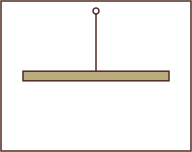
Flat carriers hang where bottles cannot stand. A 70 g plaster plaque at 12 mm thick and 14% oil load, hung on the outer end of the top shelf, holds a steady 11 m2 read for 46 days and takes up no desk space at all — which in a study is the point.
By The Scent Desk·Published 2026-10-17
- One fill lasts 46 d
- Coverage 11 m2
- Refill cycle 46 d
- Running cost CNY 22
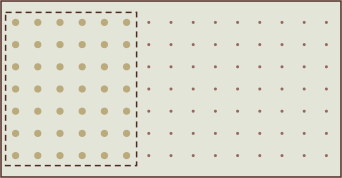
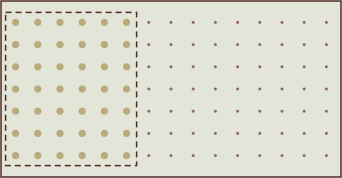
Dot spacing and radius are driven by the rung, the field width by the covered area, and the second field by the room's air class. Both fields are generated at build time from the room and carrier records.
| Floor area | 8.6 m2 |
|---|---|
| Air exchange | closed |
| Household | no pets or small children |
| Direction | dry-woody |
| Carrier | Scent plaque PLQ |
Refill calculator
Change the area or the air class and the server recomputes the cycle. The script upgrades this to a live preview; with the script off the button still works.
Basis: 8.6 m2 · closed. A smaller floor area, so the unit count can come down — but the refill interval does not stretch linearly, because a small room saturates sooner. Air class unchanged from the original plan.
The only difference between plaster and fibre board is moisture
Scent plaques come on three common substrates — scented plaster, compressed fibre board and unglazed ceramic. A study at 43% humidity, stable all year, can use any of them. What separates them is moisture behaviour. Plaster takes on and gives up water with the room and gains about 8% output for every 10 points of humidity; compressed fibre board barely absorbs moisture and has the flattest curve of the three; unglazed ceramic sits between them.
Plaster is chosen here for re-oiling, not for output. A plaster plaque takes one to three re-oil cycles, fibre board takes one, and ceramic takes six or more at a higher unit price. A study is one of the lightest-use, longest-life rooms in the register, so the number of cycles a plaque survives decides the long-run cost more than anything else.
Twelve millimetres thick, 14% load
12 mm is the practical upper limit for a plaster plaque. Thinner bodies of 6 to 8 mm have less pore volume and carry only about 2 ml, which drops the life below 25 days. Above 16 mm the plaque's own weight starts leaving marks on the wall through a 30 cm cord, and the inner pores never take oil at all.
A 14% load is about 4 ml of oil. Higher is not better: past 18% the plaster cannot draw the oil in fast enough and a film forms on the face. The first two days read strong and everything after that reads low — a 46-day life compressed into two loud days and forty-four quiet ones.
Hanging position: outer end of the top shelf, 1.15 m above the floor
The outer end beats the inner end. Against the wall at the inner end there is almost no air movement, so fragrance accumulates around the plaque in a local high-concentration pocket while the rest of the room reads nothing. The outer end has enough natural convection to spread it evenly, and the difference is immediate.
1.15 m is the top of the seated breathing band. Below 0.9 m, someone working at the desk has their nose level with the plaque and habituation sets in within two hours. Above 1.4 m the plaque is out of the seated band entirely and only registers when you stand up.
Keep at least 80 cm of horizontal distance from the chair. The reason is the same as in the wax tablet plan for this room: close range produces local habituation, which gets misread as the scent having disappeared.
Re-oiling and replacement
- When the plaque is silent at 20 cm, brush 2-3 ml of the same direction onto the face with a soft brush.
- Leave it face up for 12 hours so the oil draws into the pores.
- Wipe off anything the plaster did not take. A left-behind film traps dust and reads sharp.
- Repeat once or twice more. After the third load the pore volume is largely saturated, output falls to about 40% of the first load, and the plaque is done.
Two re-oil cycles stretch 46 days to roughly 110 and bring the monthly cost from CNY 22 down to about CNY 12.
Cost: CNY 22 a month plain, CNY 12 with two re-oils
A 70 g plaster plaque costs about CNY 34 and lasts 46 days, which is CNY 22 a month. With two re-oils a single plaque runs about 110 days and the oil adds roughly CNY 5 a cycle, which works out at CNY 12 a month. A cord is a one-off CNY 3.
Diagnosis
- Shiny surface, no scent. A film has sealed the pores. Wipe with an alcohol pad and re-oil.
- The plaque has warped. It has been sitting against a wall with a strong humidity swing, usually near an air-conditioning outlet. Move it out of the airstream.
- Only readable standing right in front of it. Too close, vertically or horizontally, and local habituation has set in. Move to 1.15 m and 80 cm clear.
- It reads sharp for a day after re-oiling. Excess oil on the face. Wipe again and leave it an extra six hours before rehanging.
Assembly, in order
- Choose the face material — Plaster and fibre board differ in exactly one way that matters: plaster pulls moisture out of the air and releases it again, fibre board does not. In a bathroom or a kitchen, take the board.
- Load the face, not the body — Brush two to three millilitres onto the unglazed face with a pipette and leave it face up for twelve hours. Loading the edges wastes oil into the air you are standing in.
- Hang it clear of fabric — Hang the plaque at least fifteen centimetres from any textile. Closer than that and the fabric becomes the second reservoir, and the room reads as one flat note.
- Wipe before you re-oil — Wipe the face with a dry cloth before the second load. Old oil that has oxidised on the surface stops the new load from migrating out.
Code PLQ · the whole body of the plaque is the reservoir; scent migrates to the surface and evaporates
What it costs to keep running
| Running cost | CNY 22 |
|---|---|
| One fill lasts | 46 d |
| Refill cycle | 46 d |
| Coverage | 11 m2 |
| Refill and replacement | 70 g plaster plaque, 12 mm thick, 30 cm waxed cord |
Failure diagnosis for L3
| What you notice | What caused it | What to change |
|---|---|---|
| The far end of the room is completely unscented | L3 working as designed. The unscented end is the point of the rung, not an imbalance to correct. | If you want the whole volume covered, move the room to its L4 plan. Adding units to an L3 set-up saturates the near half before the far half starts to read. |
| One side strong, one side weak | The carrier is upwind, or it is in front of an air-conditioning outlet that is slicing the zone in two | Move it downwind and out of the airstream. Adding reeds only makes the strong side stronger. |
| Gone within an hour of opening a window | The carrier is inside 1.8 m of the opening and is being extracted directly | Move it back past 1.8 m. L3 needs the room to turn its air over, but not through the carrier itself. |
Same room, other rung
Open the rung card — L3 · Half the room
This record went live on 2026-10-17. Records dated later in the register are not listed anywhere on the site until their date arrives.