
PLQ · Carrier register
Carrier dossier: Scent plaque
A flat scented body — plaster, compressed fibre or unglazed ceramic — that carries its reservoir through its whole thickness rather than in a bottle. No vessel, no spill, no footprint on a surface, and the only passive format that survives a 60 C car interior without changing shape.
By The Scent Desk·Published 2026-10-14
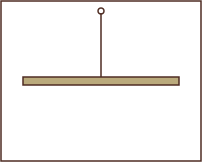
| Medium | scented plaster, unglazed ceramic or compressed fibre board, 30-90 g |
|---|---|
| Release mechanism | the whole body of the plaque is the reservoir; scent migrates to the surface and evaporates |
| Where it wins | flat profile hangs anywhere, no vessel, output very steady across its life, near-zero spill risk |
| Where it fails | cannot be topped up except by re-oiling the face, absorbs ambient moisture, breaks if dropped |
| weight g | 30–90 |
| thickness mm | 6–14 |
| oil load pct | 8–18 |
| release days | 30–90 |
| re oil cycles | 1–3 |
| coverage m2 | 3–10 |
The real difference between the three substrates
| Substrate | Pore volume | Re-oil cycles | Moisture behaviour | Typical life |
|---|---|---|---|---|
| Scented plaster | Medium | 1-3 | Absorbs and releases; output swings about 8% | 30-90 days |
| Compressed fibre board | Small | 1 | Barely absorbs; flattest curve | 45-70 days |
| Unglazed ceramic | Large | 4-8 | Moderate uptake | 25-60 days |
| Lava stone (composite) | Largest | 6-10 | Fast uptake | 25-55 days |
Choose in this order. First, is the room's humidity stable? Stable points to plaster, swinging points to fibre board. Second, will you re-oil more than once? If yes, ceramic or stone. Third, can the hanging point carry the weight?
Thickness, load, and the surface film
Plaques fail for essentially one reason: the oil load exceeds the pore volume. Safe ceilings:
- Plaster: 14-16%
- Fibre board: 10-12%
- Unglazed ceramic: 16-20%
- Lava stone: 18-24%
Above the ceiling the surplus sits on the surface as a film, and the film does three things. It reads noticeably strong for two days. It traps dust into a dark patch. And by sealing the pores it makes everything afterwards weaker than a correctly loaded plaque would have been. A plaster plaque loaded at 20% delivers less total fragrance over its life than one loaded at 14%.
Thickness against weight
6-8 mm carries about 1.5-2.5 ml and suits wardrobes and cars, where a thin cord is enough. 10-14 mm carries about 3-5 ml and suits studies and bathrooms, on a cord of 30 cm or more, or on a shelf. Above 16 mm the load passes 6 ml and the plaque's own weight makes hanging unwise; it belongs on a tray.
When hanging, the point where the cord meets the body is what cracks first. Use waxed cotton cord of at least 2 mm, pass it through and tie a double knot. Fishing line and thin nylon cut into the material at the hole.
Re-oiling: how, and how far it goes
- Start when the plaque is silent at 20 cm, not while it still reads clearly.
- Use a soft brush — not a sponge, which lifts the old oil back out of the pores — and brush 2-3 ml of the same direction evenly across the face.
- Leave face up for 12 hours.
- Wipe off what has not been absorbed with a dry cloth. Left on, it films over and collects dust within two days.
- Each load gives about 70% of the previous one. Past the third, replace the plaque instead of loading it again.
Container compatibility and cleaning
- No container is required. For a tray, use glazed porcelain or glass, never bare wood or lacquer.
- Clean by wiping only, dry or barely damp. Do not wash — water enters the pores, drives out the residual oil and leaves a water mark.
- To change direction, air the plaque in a ventilated spot for 7 to 14 days. Plaster and fibre board hold more residue; ceramic and stone hold less but release it more slowly.
- For storage, seal in a bag; a plaque keeps for over a year. After unsealing, air it for a day before use.
When not to choose it
- Where you need to change the dose on demand. A plaque's load is set when it is oiled and cannot be adjusted afterwards.
- High-humidity positions — inside a shower zone, beside a hob.
- Any hanging point a small child can reach. A dropped plaque breaks.
- Spaces that need to run more than three months without attention. Plaster and fibre board top out around 90 days.
Refill and replacement
Re-oiling works once, sometimes twice. Brush 2-3 ml of the same direction onto the face, leave it face-up for 12 hours, then wipe the excess.
Plans using this carrier
| Rooms | Rung | One fill lasts | Running cost |
|---|---|---|---|
| Study | L3 | 46 d | CNY 22 |
| Wardrobe | L2 | 62 d | CNY 15 |
| Car | L1 | 41 d | CNY 12 |
Assembly, in order
- Choose the face material — Plaster and fibre board differ in exactly one way that matters: plaster pulls moisture out of the air and releases it again, fibre board does not. In a bathroom or a kitchen, take the board.
- Load the face, not the body — Brush two to three millilitres onto the unglazed face with a pipette and leave it face up for twelve hours. Loading the edges wastes oil into the air you are standing in.
- Hang it clear of fabric — Hang the plaque at least fifteen centimetres from any textile. Closer than that and the fabric becomes the second reservoir, and the room reads as one flat note.
- Wipe before you re-oil — Wipe the face with a dry cloth before the second load. Old oil that has oxidised on the surface stops the new load from migrating out.