
LIV · L3 · Reed diffuser · woody-amber
Eight reeds, one downwind corner, 26 m2 of living room
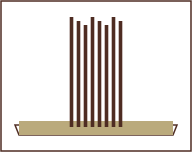
A 21.5 m2 room with a 2.72 m ceiling holds about 58 m3 of air, and one carrier in one corner will scent a third of it. The fix is not more oil, it is placement: eight 4 mm reeds in 200 ml of a woody-amber base, on the side of the room the air moves toward, covering a defined 26 m2 zone while the far end stays unscented on purpose.
By The Scent Desk·Published 2026-09-15
- One fill lasts 45 d
- Coverage 26 m2
- Refill cycle 45 d
- Running cost CNY 38
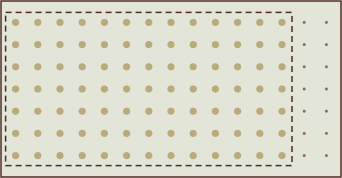
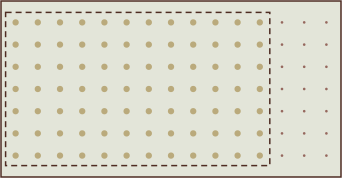
Dot spacing and radius are driven by the rung, the field width by the covered area, and the second field by the room's air class. Both fields are generated at build time from the room and carrier records.
| Floor area | 21.5 m2 |
|---|---|
| Air exchange | ventilated |
| Household | one cat |
| Direction | woody-amber |
| Carrier | Reed diffuser RD |
Refill calculator
Change the area or the air class and the server recomputes the cycle. The script upgrades this to a live preview; with the script off the button still works.
Basis: 21.5 m2 · ventilated. A smaller floor area, so the unit count can come down — but the refill interval does not stretch linearly, because a small room saturates sooner. Air class unchanged from the original plan.
Find the airflow direction before you choose a corner
The living room sits in the ventilated class — one window, opened once or twice a day — and in that class airflow has a stable direction set by the window and the door. Finding it takes a minute. Stand in the middle of the room with the window open and feel which side of your face gets air first, or watch which way a candle flame leans. Either is accurate enough.
Put the carrier in the downwind corner, the side the air moves toward after it enters. Placed upwind, the fragrance leaves the reeds and is pushed across the whole room before it can accumulate anywhere, and it arrives diluted to nothing. Placed downwind, the scent zone settles exactly where people sit — which is where it is needed.
Height 1.2 m, and 1.5 m clear of any air-conditioning outlet
1.2 m is the top of the seated breathing band. Below 0.8 m the zone hugs the floor, and the effect inverts: people standing find it sharp while people sitting cannot smell it at all. Above 1.6 m warm air collects near the ceiling and lifts the zone out of reach.
Keep 1.5 m clear of an air-conditioning outlet. Directed air does not weaken an even zone, it slices it: a single concentrated hot spot and a large dead area. That is a distribution fault, not an output fault, and adding reeds only makes the hot spot hotter.
Why eight reeds is the ceiling here
Eight 4 mm reeds move about 7.2 ml a day. A 200 ml base is nominally a 45-day fill; with one or two air changes a day the real figure is close to 40. Ten reeds would move 9 ml a day and push the room into L4 — and L4 requires a room that keeps turning its air over. A living room with the windows shut at night is sealed, and L4 output saturates it in two hours and goes flat and heavy by four.
L3 is defined as a zone covering half the room with a genuinely unscented far end. That shape is deliberate. Scent with a boundary has direction; an even fill across a whole room is the fastest way to make everyone in it stop smelling anything.
Flip every nine days
The living room exchanges air less often than a kitchen and more often than a bedroom, and nine days is the measured optimum. The signal to flip is specific: the window-side half of the zone goes quiet first, because that is where the reed surfaces skin over earliest. Reversed reeds recover in about five hours here.
Flip all eight together. Doing half creates a 24-hour trough in the output curve that is plainly audible to the nose and reads as the carrier failing.
Cost: CNY 38 a month
A 200 ml fill costs about CNY 20 at 380 ml for CNY 38, replaced every 45 days, which is CNY 13 a month. Eight 4 mm reeds cost about CNY 24 and last 70 days, which is CNY 10 a month. Woody-amber bases run about 15% above citrus bases, adding roughly CNY 2. Container depreciation and handling add the rest. The measured figure is CNY 38 a month, among the most expensive plans in the register — and at 26 m2 of coverage it works out to CNY 1.5 per square metre per month, the lowest in the book.
Diagnosis
- The far end has nothing. That is L3 working as specified. If you want the whole room covered, this room's carrier for that job is the ceramic stone plan, which sits at L4.
- One side strong, one side weak. The carrier is on the upwind side, or it is standing in front of an air-conditioning outlet. Move it downwind.
- Everything gone an hour after opening the window. The carrier is too close to the opening and is being extracted directly. Keep at least 1.8 m between the vessel and the window.
- A sharp patch against the wall. Eight reeds in one bottle hard against plaster pushes diffusion to one side. Leave 20 cm of clearance behind the vessel.
- The woody note turns sweet after a month. Normal for amber bases as the light fraction leaves. Either accept it or switch the fill at the 30-day mark rather than 45.
Assembly, in order
- Fill the vessel — Pour 120 ml of base into a clean glass vessel and stop about 3 cm below the neck, so the reeds can stand upright instead of leaning on the rim.
- Load the reeds — Insert the reeds, wait thirty seconds, then invert the whole bundle once so the soaked ends point up. Flipping at the start roughly halves the time to the first readable scent.
- Wait out the first six hours — Leave the room alone for six hours. Output is unstable before that, and a judgement made in the first hour is wrong in the same direction every time.
- Flip on a 14-day cycle — Flip the bundle every fourteen days and move the outer reeds to the centre. Replace the entire bundle at ninety days; saturated rattan stops drawing.
- Top up below one third — Refill with the same base once the level falls below a third of the vessel. Never mix two directions in one vessel; the old one stays in the glass for weeks.
Code RD · capillary draw up rattan or fibre reeds, evaporation only at the exposed reed surface
What it costs to keep running
| Running cost | CNY 38 |
|---|---|
| One fill lasts | 45 d |
| Refill cycle | 45 d |
| Coverage | 26 m2 |
| Refill and replacement | 8 x 4 mm rattan reeds (replace at 70 days), 200 ml base liquid |
Failure diagnosis for L3
| What you notice | What caused it | What to change |
|---|---|---|
| The far end of the room is completely unscented | L3 working as designed. The unscented end is the point of the rung, not an imbalance to correct. | If you want the whole volume covered, move the room to its L4 plan. Adding units to an L3 set-up saturates the near half before the far half starts to read. |
| One side strong, one side weak | The carrier is upwind, or it is in front of an air-conditioning outlet that is slicing the zone in two | Move it downwind and out of the airstream. Adding reeds only makes the strong side stronger. |
| Gone within an hour of opening a window | The carrier is inside 1.8 m of the opening and is being extracted directly | Move it back past 1.8 m. L3 needs the room to turn its air over, but not through the carrier itself. |
Same room, other rung
Nothing at this rung has come off the drip yet.
Open the rung card — L3 · Half the room
This record went live on 2026-09-15. Records dated later in the register are not listed anywhere on the site until their date arrives.