
KIT · L3 · Reed diffuser · herbal-green
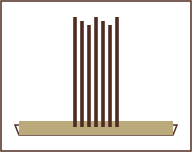
A 7-reed diffuser placed 2.4 m from the hob in a 9.8 m2 kitchen
Cooking puts more volatiles into the air than any carrier can answer, so the goal in a kitchen is not to compete with dinner. It is to clear the residue afterwards. Seven 4 mm reeds in 180 ml of a herbal-green base, placed 2.4 m from the hob on the far side of the extractor's reach, does that without ever trying to out-smell a pan.
By The Scent Desk·Published 2026-09-09
- One fill lasts 40 d
- Coverage 22 m2
- Refill cycle 45 d
- Running cost CNY 34
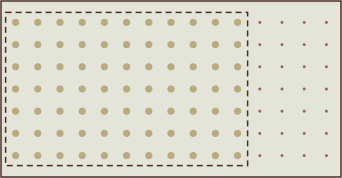
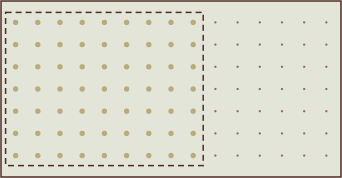
Dot spacing and radius are driven by the rung, the field width by the covered area, and the second field by the room's air class. Both fields are generated at build time from the room and carrier records.
| Floor area | 9.8 m2 |
|---|---|
| Air exchange | draughty |
| Household | no pets or small children |
| Direction | herbal-green |
| Carrier | Reed diffuser RD |
Refill calculator
Change the area or the air class and the server recomputes the cycle. The script upgrades this to a live preview; with the script off the button still works.
Basis: 9.8 m2 · draughty. A smaller floor area, so the unit count can come down — but the refill interval does not stretch linearly, because a small room saturates sooner. Air class unchanged from the original plan.
Distance from the hob is the only parameter that really works
An extractor hood pulls hard within roughly a 1.2 m radius of the hob. Any carrier inside that radius is feeding fragrance straight into the duct, which means every time the pan goes on you are paying to have your own scent removed. Move the vessel to 2.4 m — the far corner, usually near the kitchen door or the sill — and only then does the word "output" mean anything.
Height matters nearly as much. Below 0.9 m the rising plume of hot air lifts the fragrance band away before it can be read; above 1.4 m the vessel sits at the edge of the hood's thermal plume and reads unstable. A shelf at 1.1 m on the far wall is the sweet spot, and it happens to be the height most kitchens already have.
Timing: run it after dinner, not before
Most people light a scent before cooking. In a kitchen that is the single most common mistake. During cooking the air is full of aldehydes and fat aerosols from frying, and fragrance molecules cannot compete with them for the same air; at the same time the hood is exchanging the room's volume more than ten times an hour. The result is predictable — the food smells like food and the fragrance has been extracted.
The order that works is: heat off, hood off, window open for ten minutes to clear the cooking aerosol, then let the carrier do its work in the cleaned room. At that point a herbal-green base reads as a clean worktop rather than as perfume, which is exactly what a kitchen should smell like.
The arithmetic behind seven 4 mm reeds
A single 4 mm rattan reed carries about 0.85 ml a day. Seven reeds move roughly 6.0 ml a day, which gives 180 ml a nominal 40-day life. In practice a kitchen exchanging its air three times an hour runs dry earlier, and the real figure is 32 to 35 days. Budget for the shorter number.
Why not eight reeds. Eight would push the room into L4 territory, and L4 only works in a room that genuinely turns its air over. A kitchen's ventilation is intermittent: once the hood goes off, the room is a sealed 9.8 m2 box, and L4 output saturates a box that size in a little under two hours and then reads flat and heavy. Seven sits at the top of L3, which is the highest rung a closed kitchen can hold.
Flip every 10 days rather than the 14 used in dry rooms. Frequent air exchange forms a dry shell on the exposed reed surface faster, and that shell blocks capillary draw. Reversed reeds return to full output within about four hours here, against six in the entryway.
Keep it out of the wet zone and away from flame
Humidity in a working kitchen reaches about 55% while pans are on and falls back to roughly 45% after. Unglazed ceramic, bare plaster, unsealed wood trays and pressed board all take on water; over a single season they go mottled and the scent takes on a damp note. In this room the vessel must be glass or glazed ceramic, and if the base of the bottle sits on a wooden shelf, put a coaster under it.
Nothing at all within 30 cm of a gas burner. Reed diffuser base liquid is flammable until it has evaporated, which is a property of the format rather than a defect of any particular brand. A shelf above the hob, however convenient, is the wrong shelf.
Cost, and why the sachet plan is cheaper but not equal
At 380 ml for CNY 38, a 180 ml refill costs about CNY 18 and lasts 40 days, which is CNY 14 a month. Seven 4 mm reeds cost about CNY 20 and are replaced every 75 days, which is CNY 8 a month. Handling losses add about CNY 12 a year. The measured monthly figure is CNY 34, the most expensive kitchen option in this register.
The cheaper alternative is a scent sachet at roughly CNY 10 a month, and it is genuinely the right answer for a 3 m2 cupboard. It is not a substitute here, because a sachet's read is 3 to 4 m2 and a kitchen after cooking needs to clear 10 m2 of standing air. The saving buys you a room that still smells of last night's frying.
Diagnosis
- Nothing at all. The carrier is inside the hood's pull radius, or the reeds have shelled over. Measure the distance first, then flip the reeds.
- Too strong once the hood goes off. The room has gone sealed with L4-level output in it. Drop to five reeds. A kitchen does not need a full-room set.
- A sharp spot beside the fridge or microwave. Local heat is driving volatiles off faster. Move 50 cm clear of any appliance that warms its own casing.
- The scent turns after three weeks. Water has been drawn into an unsealed vessel or a wooden tray has taken on moisture. Switch the container, keep the base.
Assembly, in order
- Fill the vessel — Pour 120 ml of base into a clean glass vessel and stop about 3 cm below the neck, so the reeds can stand upright instead of leaning on the rim.
- Load the reeds — Insert the reeds, wait thirty seconds, then invert the whole bundle once so the soaked ends point up. Flipping at the start roughly halves the time to the first readable scent.
- Wait out the first six hours — Leave the room alone for six hours. Output is unstable before that, and a judgement made in the first hour is wrong in the same direction every time.
- Flip on a 14-day cycle — Flip the bundle every fourteen days and move the outer reeds to the centre. Replace the entire bundle at ninety days; saturated rattan stops drawing.
- Top up below one third — Refill with the same base once the level falls below a third of the vessel. Never mix two directions in one vessel; the old one stays in the glass for weeks.
Code RD · capillary draw up rattan or fibre reeds, evaporation only at the exposed reed surface
What it costs to keep running
| Running cost | CNY 34 |
|---|---|
| One fill lasts | 40 d |
| Refill cycle | 45 d |
| Coverage | 22 m2 |
| Refill and replacement | 7 x 4 mm rattan reeds (replace at 75 days), 180 ml base liquid |
Failure diagnosis for L3
| What you notice | What caused it | What to change |
|---|---|---|
| The far end of the room is completely unscented | L3 working as designed. The unscented end is the point of the rung, not an imbalance to correct. | If you want the whole volume covered, move the room to its L4 plan. Adding units to an L3 set-up saturates the near half before the far half starts to read. |
| One side strong, one side weak | The carrier is upwind, or it is in front of an air-conditioning outlet that is slicing the zone in two | Move it downwind and out of the airstream. Adding reeds only makes the strong side stronger. |
| Gone within an hour of opening a window | The carrier is inside 1.8 m of the opening and is being extracted directly | Move it back past 1.8 m. L3 needs the room to turn its air over, but not through the carrier itself. |
Same room, other rung
Open the rung card — L3 · Half the room
This record went live on 2026-09-09. Records dated later in the register are not listed anywhere on the site until their date arrives.