
ENT · L1 · Reed diffuser · citrus-herbal
A five-reed diffuser for a 3.4 m2 entryway that never gets opened twice
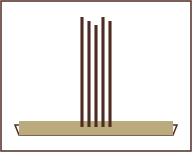
The entryway is the only room in the register where a carrier is asked to work at a distance, in a rush, and against a door that keeps swapping the air. Five reeds of 3.5 mm in 120 ml of a citrus-herbal base is the smallest reed set-up that still reads from the coat rail — and the largest that does not turn the hall into a wall of scent.
By The Scent Desk·Published 2026-09-03
- One fill lasts 32 d
- Coverage 9 m2
- Refill cycle 60 d
- Running cost CNY 21
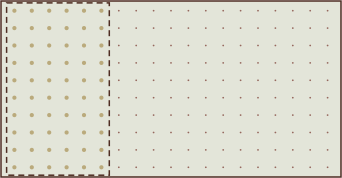
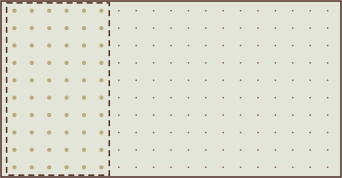
Dot spacing and radius are driven by the rung, the field width by the covered area, and the second field by the room's air class. Both fields are generated at build time from the room and carrier records.
| Floor area | 3.4 m2 |
|---|---|
| Air exchange | closed |
| Household | no pets or small children |
| Direction | citrus-herbal |
| Carrier | Reed diffuser RD |
Refill calculator
Change the area or the air class and the server recomputes the cycle. The script upgrades this to a live preview; with the script off the button still works.
Basis: 3.4 m2 · closed. A smaller floor area, so the unit count can come down — but the refill interval does not stretch linearly, because a small room saturates sooner. Air class unchanged from the original plan.
Why five reeds and not four
Four reeds of 3.5 mm carry roughly 3.1 ml a day out of a 120 ml bottle, which is a 38-day nominal life but only about 5 m2 of usable read. In a 3.4 m2 room that sounds generous until the door opens: five openings an hour strip the layer standing above 0.6 m, and a four-reed set-up stops registering from the coat rail within twenty minutes of the last opening. Five reeds lift the figure to about 4.2 ml a day and hold the read out to 9 m2, which is the whole footprint plus the strip of corridor the door reveals.
Six reeds would hold the read too, and that is exactly the problem. Six pushes the level from L1 into L2 and the entryway stops being a threshold and starts being a room that smells. Anything you can smell from the street side of the door is one rung too high for a hall this size.
Placement: 1.35 m on the door-side wall
Air in a 3.4 m2 entry stratifies faster than people expect. Cold air entering at the base of the door travels along the floor and takes the fragrance layer below 0.6 m with it. A carrier on top of a shoe cabinet usually sits at 0.9-1.1 m, which is precisely the height where that floor layer strips away cleanest. Moving the vessel to 1.35 m on the wall beside the door clears the floor draught and puts the release band at standing breathing height.
Keep at least 60 cm from the door gap itself. Directly opposite the gap, the carrier gets flushed five to seven times a day and reads as intermittent; 60 cm to the side and the same output reads as continuous.
Distance from the coat rail matters too. At 40 cm the reeds sit close enough to the hanging coats that wool and cotton pick up oil from the moving air, and a coat that smells of diffuser base for a week is not the intended effect. A metre is better, and it costs nothing in perceived strength.
Build order: three reeds first, two on day seven
- Unpack all five reeds and insert them together. Leave for 30 minutes so each one saturates through its full length.
- After 30 minutes, pull two reeds out and turn them end for end, wet end up.
- Leave the remaining three in the bottle. For the first week, three reeds carry the room.
- On day seven, insert the two reversed reeds wet end down. Output now reaches the top of the L1 band.
The three-then-two order is not superstition. New rattan draws at roughly twice the rate of already-saturated rattan, so loading all five at once produces a first 48 hours that runs more than half again above steady state — and the entryway is the one room where that spike gets misread as "too strong" and the whole plan gets abandoned.
Tuning: remove reeds, never change direction
The L1 test is simple. Standing at the door, you should smell nothing. Walking to the coat rail, you should smell it clearly. If it reads at the door, remove one reed and wait a full 24 hours before judging again — rattan output takes most of a day to settle after a change.
Do not try to descend a rung by switching to a lighter scent direction. Direction answers what it smells like; reed count answers how much. Swapping a citrus-herbal base for a weaker citrus-herbal base changes nothing measurable and leaves you guessing.
Flip all five reeds every 14 days. Ambient humidity in an entry hall sits near 44%, drier than a bathroom, so a flipped reed returns to full output within about six hours rather than overnight.
Running cost: about CNY 21 a month
The 120 ml base runs 32 days at this setting. A 380 ml refill bottle costs about CNY 38 and covers three fills, which is CNY 12 a month. A set of five 3.5 mm reeds costs about CNY 9 and is replaced every 90 days, which is CNY 3 a month. Handling losses on refill add roughly CNY 2. The measured figure lands at CNY 21.
That is cheaper than the living room by a wide margin, and the reason is not thrift. Fewer reeds means less oil leaving the bottle per day, and a smaller room means the same output does more work. The entryway is the cheapest room in the register to run well and the easiest to run badly.
What goes wrong, and what to do
- Nothing at all. Reeds are saturated. Pull all five, reverse them, and wait a day. Replacement rather than reversal is needed only after about 90 days.
- Too strong at the door. Either five reeds are in at once before day seven, or the vessel faces the door gap. Reduce to three, or slide it 40 cm along the wall.
- A sharp patch right at the vessel. Base liquid has splashed onto paint or onto the cabinet top. Within 25 cm a reed diffuser runs far more concentrated than at arm's length, so keep soft furnishings and lacquered surfaces out of that radius.
- The read collapses every evening. The door is being used at peak hours and the layer is being stripped faster than the reeds can rebuild it. Move the carrier further from the door rather than adding reeds; adding reeds raises the total without fixing the shape.
Assembly, in order
- Fill the vessel — Pour 120 ml of base into a clean glass vessel and stop about 3 cm below the neck, so the reeds can stand upright instead of leaning on the rim.
- Load the reeds — Insert the reeds, wait thirty seconds, then invert the whole bundle once so the soaked ends point up. Flipping at the start roughly halves the time to the first readable scent.
- Wait out the first six hours — Leave the room alone for six hours. Output is unstable before that, and a judgement made in the first hour is wrong in the same direction every time.
- Flip on a 14-day cycle — Flip the bundle every fourteen days and move the outer reeds to the centre. Replace the entire bundle at ninety days; saturated rattan stops drawing.
- Top up below one third — Refill with the same base once the level falls below a third of the vessel. Never mix two directions in one vessel; the old one stays in the glass for weeks.
Code RD · capillary draw up rattan or fibre reeds, evaporation only at the exposed reed surface
What it costs to keep running
| Running cost | CNY 21 |
|---|---|
| One fill lasts | 32 d |
| Refill cycle | 60 d |
| Coverage | 9 m2 |
| Refill and replacement | 5 x 3.5 mm rattan reeds (replace at 90 days), 120 ml base liquid |
Failure diagnosis for L1
| What you notice | What caused it | What to change |
|---|---|---|
| Nothing at all, even with your head inside the wardrobe | The filler has gone flat, or the pouch is lying flat against the wood and half its surface is doing nothing | Squeeze or re-oil the filler and stand the pouch side-on. A flat pouch in a sealed volume loses about a third of its output. |
| It reads while you are still in the doorway | Too many units for a 1-5 m2 volume. Two carriers in one wardrobe is the usual version of this. | Take one unit out and leave the door open for an hour. Judge again the next day, not the same evening. |
| A sharp patch right beside the carrier | Neat oil has landed on the filler, or something is being held within the near field | Replace the filler. Nothing dilutes in place, and moving an L1 carrier into an open room does not fix a concentration problem. |
Same room, other rung
Open the rung card — L1 · Barely there
This record went live on 2026-09-03. Records dated later in the register are not listed anywhere on the site until their date arrives.